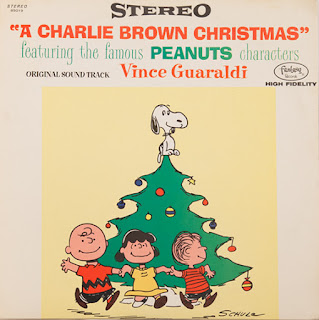
Showing posts with label Linus and Lucy. Show all posts

Wednesday, July 10, 2024

A kinder, gentler Election


It has been a busy summer.

Hot on the heels of Guaraldi’s never-before-released score for It Was a Short Summer, Charlie Brown, the similarly never-before-released score for the eighth prime-time Peanuts TV special, You’re Not Elected, Charlie Brown, will debut on September 6 on CD, 12-inch BioVinyl and via digital download. Pre-orders are available now, at the usual outlets


A Woodstock Yellow BioVinyl variant will be available as a Record Store Day Exclusive.


Check out the Lee Mendelson Film Productions press release here.


Guaraldi — on keyboards, vocals and guitar — is joined by Tom Harrell, trumpet; Pat O’Hara, trombone; Mel Martin, clarinet, soprano sax and piccolo; Seward McCain, bass and flute; and Glenn Cronkhite, drums. John Scott Trotter was music supervisor. This album is produced by Sean Mendelson and Jason Mendelson; remixed at Bones and Knives by Terry Carleton; and restored and re-mastered by Vinson Hudson.


The album features the 16 studio recordings which became the TV special’s score, along with nine bonus/alternative tracks.


Show score:

1. "Incumbent Waltz"

2. "You're Not Elected, Charlie Brown"

3. "Oh, Good Grief!"

4. "Cookin' Snoopy (Fast Piano Jazz)"

5. "Blue Charlie Brown"

6. "Incumbent Waltz (Reprise)"

7. "Linus and Lucy"/"Poor Charlie Brown"

8. "Joe Cool (Vocal)"

9. "Incumbent Waltz (Second Reprise)"

10. "Elect Linus (Dilemma)"/"Woodstock's Wake Up"

11. "Joe Cool (Unused Reprise)"

12. "Oh, Good Grief! (Reprise)"

13. "Deserted Charlie Brown"

14. "You're Not Elected, Charlie Brown (Reprise)"

15. "Linus and Lucy (Reprise)"

16. "You're Not Elected, Charlie Brown (Second Reprise: End Credits)"


Bonus Content

17. "Joe Cool (Alternate Take 1)"

18. "Joe Cool (Alternate Rehearsal Take)"

19. "Blue Charlie Brown (Alternate Take 1)"

20. "African Sleigh Ride (Bonus Track)"

21. "Cookin' Snoopy (Fast Piano Jazz; Alternate Takes 1, 2 and 3)"

22. "Incumbent Waltz (Second Reprise, Alternate Take 1)"

23. "Incumbent Waltz (Second Reprise, Alternate Take 3)"

24. "Incumbent Waltz (Unused Cue)"

25. "Linus and Lucy (Acoustic Piano Mix)"


Four tracks can be previewed here.


Music highlights include a terrific arrangement of "Joe Cool” — much longer than what is heard in the special — which boasts nifty flute and guitar touches. Other tasty treats include an unexpectedly peppy handling of “Blue Charlie Brown,” two delightful variations on “Linus and Lucy,” and McCain’s deft bass work on “Oh, Good Grief (Reprise).”


The LPs and CDs are eco-conscious. The LPs are made with BioVinyl, a new product that replaces petroleum in S-PVC by recycling used cooking oil or industrial waste, resulting in considerable CO2 savings compared to traditional PVC. Each record also comes in a reusable, compostable PLA bag made of 99% renewable material. The jacket, label and liner notes are made from sustainably forested trees, for minimum ecological harm. (None of these modifications sacrifices acoustic or optical quality.) The CDs also are made of recycled material, and their paper content comes from sustainably forested trees.


All physical copies feature extensive liner notes by my very own self, along with similarly detailed notes by Sean Mendelson, son of Peanuts producer Lee Mendelson. The LP release also includes rare photographs and images from the original tape boxes: recent re-discoveries that led to this release.


Remember: The ongoing wave of these "new" soundtracks depends upon the sales generated by each release ... so buy one for yourself, and a second copy as a gift for a friend! 

Wednesday, August 2, 2023

Thanksgiving comes early this year!

Big news, gang.


We’ve all held our breath since late last year, hoping that the reception for the Definitive, Super Deluxe Charlie Brown Christmas — and the recently discovered, isn’t-it-fabulous original session recordings that produced a superior soundtrack for Great Pumpkin -- would translate, moving forward, into additional releases from Guaraldi’s Peanuts canon.


It has come to pass.


October 20 will see the debut of the full soundtrack from A Charlie Brown Thanksgiving, just in time for the 1973 special’s 50th anniversary: 13 themes and cues used in the show, along with nine never-before-heard bonus and alternative tracks. The album will be available in three states: CD, vinyl and digital download.


Check out the official press release here.


Pre-order the CD from MVD here.


Pre-order the standard (black vinyl) LP from MVD here.


Pre-order the above CD or LP from Amazon here and here.


Pre-order the special Record Store Day jelly bean green vinyl LP here.


Pre-order the Target exclusive cranberry vinyl LP here.


The track list:


Show score:

    1. Charlie Brown Blues

    2. Thanksgiving Theme

    3. Thanksgiving Theme (Reprise)

    4. Peppermint Patty

    5. Little Birdie

    6. Thanksgiving Interlude

    7. Is It James or Charlie?

    8. Linus and Lucy

    9. Fife & Drums Theme

    10. Charlie Brown Blues (Reprise)

    11. Thanksgiving Interlude (Reprise)

    12. Thanksgiving Theme (2nd Reprise)

    13. Thanksgiving Theme (3rd  Reprise)


Bonus/Alternate tracks:

    14. Thanksgiving Theme (Alternate)

    15. Peppermint Patty (Bonus Mix)

    16. Linus and Lucy (Bonus Mix)

    17. Thanksgiving Interlude (Alternate take 2, 4, and 6)

    18. Thanksgiving Interlude (Alternate take 10)

    19. Thanksgiving Interlude (Alternate take 14)

    20. Is It James or Charlie? (Bonus mix with Whistling)

    21. Clark and Guaraldi


Preview Track 16 here.


Preview Track 20 here.


The recording features Vince Guaraldi, piano, keyboards and vocals; Tom Harrell, trumpet and brass arrangements; Chuck Bennett, trombone; Seward McCain, electric bass; and Mike Clark, drums. The album is produced by Sean and Jason Mendelson, re-mixed by Terry Carleton at Bones and Knives, and restored and mastered/re-mastered by Vinson Hudson.


Avid Guaraldi fans have long regarded this Emmy Award-winning TV special as a favorite, which is no surprise; the show is wall-to-wall music, bouncing between acoustic and electric keyboards, going silent only during Linus’ gentle sermon about the first Thanksgiving (a speech almost as eloquent as the one he delivers in Charlie Brown Christmas).


That sequence aside, Guaraldi was allowed to stretch and supply longer cues, each one beginning as the previous one fades. The show boasts three new tunes, starting with a lyrical title theme constructed from acoustic piano filigrees that evoke the keyboard cascades in “Skating.” An impudent cue titled “Is It James or Charlie?” adds a bit of James Brown sass to the mix; and the stand-out newcomer is Guaraldi’s vocal on “Little Birdie,” played at length when Snoopy — tasked with setting up the outdoor dining arrangements — wrestles with a basketball net, a garage door, a ping-pong table and an impressively sentient folding chair. 


Returning cues include one of Guaraldi’s best arrangements of “Linus and Lucy,” with brass adding a spirited counterpoint to the primary theme, and also shading a new four-chord climb at the end of each verse’s fourth measure: heard while Snoopy orchestrates the Thanksgiving “dinner” of buttered toast, popcorn, pretzels, jelly beans and ice cream parfaits. “Peppermint Patty” gets a quiet, leisurely arrangement on electric keyboard: perfectly echoing the girl’s coquettish side, notably when she flirts with Charlie Brown over the phone, while inviting herself — and Marcie and Franklin — to a party that doesn’t yet exist. 


The show’s final reprise of the title theme introduces a sparkling brass counterpoint: a terrific conclusion to a half-hour of solid combo jazz.


What’s not to love?

Friday, January 6, 2023

Chart success: 2022

After the excitement generated by last year's holiday-season sales of Guaraldi's soundtrack to A Charlie Brown Christmas, the question was whether the results would be as spectacular this year.

Not quite ... but still very impressive.

Three Billboard charts held our attention this year:

• The Billboard 200, which tracks album sales across all platforms (the formula being 1,500 on-demand audio and/or video song streams = 10 tracks sales = 1 album sale);

Billboard's Top Album Sales, which preserves the traditional methodology of counting solely pure album sales (which is where all those variant vinyl LPs play an important role); and

Billboard's Hot 100, which tracks the popularity of individual songs.

Last year, A Charlie Brown Christmas rose to #6 on the Billboard 200. So, how did it do this year?

The album entered the chart (once again, a "re-entry") for the week of November 19, at #90. It quickly rose to #43 the following week, and then #17 on December 3. It entered the top 10 — at #10 — the next week, but dropped to #12 on December 17. Then it rallied, and rose to #9 on December 24 ... and then #8 on December 31. Alas, that proved to be its peak, as it dropped back to #10 during the week of January 7.

Ah, but the news was much better in the Top Album Sales chart, where A Charlie Brown Christmas entered at #11 on December 3. It rose to #7 the following week, and then to #5 on December 17 ... which surpassed the previous year's peak position (#6). But Vince wasn't finished; his album hit #2 (!) on December 24, trailing behind only Taylor Swift's Midnight.

We held our breath, and wondered ... could Charlie Brown overtake Ms. Swift the following week?

(Highly unlikely. A Charlie Brown Christmas sold 17,000 units that week, to achieve its #2 status ... while Midnight's sales were in the low six figures.)

Alas, A Charlie Brown Christmas dropped to #3 on December 31, and then to #8 on January 7.

UPDATE: It dropped to #40, for the week ending January 14. (Guaraldi vanished from the other two charts.)

The Hot 100 chart offered a bit of solace. "Linus and Lucy" popped up for one week, at #49 on December 31, giving that tune its second run on this chart, following the previous year's surprise appearance (at #37). It disappeared on January 7, when "Christmas Time Is Here" debuted, at #50. It, too, did better the previous year, with a two-week run (#48, then #41).

Albeit a bit disappointing, we must put this chart action in perspective; we're talking about music that was produced almost seven decades ago, by a jazz artist who's been dead for almost half a century. If that isn't unprecedented, it's certainly astonishing!

Monday, January 3, 2022

Chart success!

Guaraldi's score for A Charlie Brown Christmas has been popular ever since it debuted back in 1965, so it's no surprise that sales increase every year, as we approach the holiday season. What is surprising is that the album's popularity — as measured by sales, and recorded by Billboard magazine's various charts — has been increasing dramatically during the past several years.

The album didn't achieve any Billboard ranking until 1987, when (finally!) it debuted on the Top Holiday Albums chart. Two decades later — for the week ending January 27, 2007 — it peaked at No. 2 on that chart.

Its performance on the Billboard 200 (album) chart is more noteworthy, as this chart clocks all genres. A Charlie Brown Christmas always has posted respectable numbers during the final month of each year, but it finally reached the Top 10 — at #10 — just a year ago, on January 2, 2021.

Ah, but its performance this past holiday season has been spectacular.

The album entered the Billboard 200 chart on the week ending November 13, at #159. It rose to #63 the following week, then #51, and then #21. It hit #10 on December 11. Then it rose to #9 the following week, and #8 on Christmas Day.

Then — wait for it — the album hit #6 (!) on January 1, 2022. That's amazing.

(I suspect all those variants LPs, which have become an annual tradition, had a great deal to do with that ranking.)

UPDATE: With the holidays behind us, I guessed it would drop much lower the following week ... but that didn't happen. A Charlie Brown Christmas still placed a very respectable #8 for the week concluding January 8.

But this isn't even the best news.

Billboard's Hot 100 tracks the popularity of individual songs; way back in the day, that was measured by the sales of 45 singles. These days, as explained by Billboard, "The week's most popular songs across all genres [are] ranked by radio airplay audience impressions, as measured by Nielsen Music; sales data, as compiled by Nielsen Music; and streaming activity data provided by online music sources."

Guaraldi's only song to hit the Hot 100 was "Cast Your Fate to the Wind," which entered that chart — at #94 — on December 8, 1962. During a 19-week run that finally concluded on April 6, 1963, it peaked at #22 on February 23.

That song remained a Hot 100 Guaraldi one-shot ... until now.

The just-released Hot 100 chart — also dated January 1, 2022 — reveals two new debuts: "Linus and Lucy," at #37; and "Christmas Time Is Here," at #48.

UPDATE: "Christmas Time Is Here" rose to #41 for the week dated January 8, although (alas) "Linus and Lucy" vanished from the chart.

More than half a century after they were released.

This truly has been a magical Guaraldi Christmas!

[Note: The chart links above always default to the most recent week; you can dial back to any previous week by clicking on the blue circle calendar icon, directly below the chart title.]

Tuesday, June 29, 2021

Archival gold

Hang onto your hats; this one is 
huge.

The first tantalizing seed was planted at some point in 2009, during the research phase of my Guaraldi bio (a few years before I began crafting the actual text). One of San Francisco Chronicle music critic Ralph Gleason’s columns — on July 16, 1964 — briefly mentioned that Guaraldi and Bola Sete soon would record some short programs, known as “fills,” for National Educational Television (NET) member stations. That’s all I would know for more than a decade, despite extensive investigation.


In early 2011, I began what quickly became a warm and friendly email and phone correspondence with a fellow Guaraldi fan named Doug, who worked (still works) on Capitol Hill in Washington, D.C. His proximity to the Library of Congress — and his willingness to lend his investigative talents — proved quite helpful, on numerous occasions. In mid-June, I mentioned the NET fills, wondering whether there might be any reference to them in the Library of Congress (LoC), and/or whether any leads might point to former NET (now PBS) stations possessing additional information … or, better yet, copies of old tapes. During the next several years — to my grateful surprise, when he later detailed this effort — he exchanged more than 180 emails (!) with “various and sundry folks” while trying to confirm existence and contents. A few individuals provided encouragement and direction, although — alas — every potential lead went nowhere.


My Guaraldi bio was published in April 2012. The filmography (Appendix C) includes a listing for the NET fills, along with a frustrating final sentence noting that “no tapes have been found thus far.”


And that’s where the matter remained, for nearly a decade. I re-checked the LoC databases every year or so, to no avail.


Then, in early May 2020, I stumbled upon the LoC’s recently added NET Microfiche Special Collection … and the picture rapidly expanded. I learned that the Guaraldi/Sete fills had been made specifically to accompany an imported 13-episode Granada-TV anthology series titled Stories of Guy de Maupassant; I even was able to determine which episodes were attached to Guaraldi and/or Sete performances. (The full story of that discovery is detailed in this earlier blog post.)

Friday, May 14, 2021

Exploring BMI (and no, I don't mean body mass index)

I recently took another deep dive into Guaraldi’s entries in the Broadcast Music Inc. (BMI) Repertoire database; far too much time has elapsed, since the last time I investigated.

Quite a lot has changed.


A bit of background first, for readers unfamiliar with this organization. BMI was founded in 1939, with the belief that all songwriters, composers and publishers have the right to be paid for the use of their intellectual property, no matter how that property is used. Thus, BMI is a music performing rights organization, which represents songwriters — even when they’re also performers — as well as film, television, musical theater and classical music composers and, of course, music publishers. BMI collects money from the entities and businesses that use such music in the course of a given time period, and then pays out that money as royalties to the composers and publishers of the songs and compositions that have been played. 


BMI maintains an ongoing list of any composer's work, and Guaraldi is no different. The information is fascinating, both from the standpoint of what is on the list, and what is not. It also has become obvious that Guaraldi's selections live on, and continue to be used extensively long after his death. He certainly wasn’t with us, for example, when some of his themes wound up as background cues for Live with Regis and Kathy Lee. And, of course, bits of “Linus and Lucy” have turned up on numerous TV commercials, most famously for MetLife.


The BMI database includes most of the songs and themes Guaraldi wrote during his career. You’ll find most of the familiar Peanuts themes, along with “Cast Your Fate to the Wind,” “Star Song,” “Treat Street” and many, many more. But not everything; quite a few aren’t registered here. (Further details can be found at this web page.)


You’ll also spot several unfamiliar titles: songs that Guaraldi is known to have performed during his career, and which he copyrighted via the U.S. Library of Congress, but which he never got around to recording. They include “The Big Movie Theme,” “Lethargy,” “My Loneliness,” “Sand and Sea” and “Twilight of Youth.”


Other entries are simply unusual. What are we to make of “Eddie Bone,” “Lanza Tus Penas Al Viento” or “Sunset Music”?

Wednesday, July 17, 2019

Los Gatos memories

I live for letters like this one.

It actually came to my 5CP blog partner Scott, who forwarded it to me; I immediately got in touch with the writer, Mark, who (alas!) wasn't able to offer any additional details. But he readily granted permission to publish both his note and the photo he had sent with it.

I'll turn the rest of this post over to him.

*********

In December 2017, I had just finished my annual viewing of A Charlie Brown Christmas on a new Blu-Ray set I picked up at Costco, and saw Scott on the bonus feature "making of" documentary. That led me to a quick Internet search, and then your pages on Peanuts and Vince Guaraldi. Both were fun to look through, and are obviously labors of love. 

Mom brought home his Black Orpheus LP after hearing "Cast Your Fate To The Wind" somewhere on the radio — perhaps from the public television special about making the record — and we were both big Peanuts fans. My husband isn't, but he does appreciate the music, so I cut him some slack. (Some.)

In October 1967, my folks took me to the Old Town Theater in Los Gatos — we lived just a short ways away in San Jose, at the time — to see Guaraldi and his combo. For some reason we got there early, and ended up in the front row. Being 15, I was waiting for two songs: "Cast Your Fate To The Wind" and "Linus and Lucy." 

During the intermission, I asked someone on the stage if I could get him to autograph my program; they signed first, and then said Guaraldi was outside the theater, downstairs in a place called The Cellar. It was uncharacteristically bold for me, but — Instamatic in hand — I went looking for him. Found him, too ... and took a couple of snapshots, as he signed my program, which I still have, somewhere. Mom and Dad were both surprised that I'd gone off and done that, and so was I. I even asked if he was going to play "Linus and Lucy," and he said he would. When they launched into it after intermission, he looked down at me in the front row and smiled just a bit. It's a fond memory I'll never forget.

I found the snapshots a couple of years ago, and scanned them. Mom passed in January 2017, but I think of her a lot, naturally ... certainly that day, while watching the special for the first time without her.

Tuesday, February 14, 2017

The Peanuts Connection: Down to the last note!

I first "met" Rob Kirby when he was one of several hundred individuals who submitted an essay for 2009's Security Blankets: How Peanuts Touched Our Lives, the book I co-edited with Don Fraser. Rob's essay was charming, warm and droll: precisely the sort of "personal touch" that we were seeking. He easily made the cut, and his contribution — and a similarly droll photo — can be found on Page 75.


Rob's essay also acknowledged his fondness for Guaraldi, and recognition of the major impact that Vince's music had on the early Peanuts TV specials. Our shared interest kept us in touch, exchanging notes every so often, with Rob occasionally hinting at a "big project" that he kept meaning to tackle.

Typical British understatement.

Rob has completed his labor of love, and it's astonishing. Starting with the Music Use Sheets that I had posted on one of my many Guaraldi web pages, and armed with DVDs of every Guaraldi-scored Peanuts TV special — and the big-screen film A Boy Named Charlie Brown — along with all the albums of Guaraldi's music available to the mainstream public, Rob meticulously analyzed every second of music in each film, cross-checking against the titles indicated by the Music Use Sheets, and in many cases filling in additional data and correcting mistakes. (As I explain, in that page's introduction, Music Use Sheets are "dynamic" documents that undergo changes en route to a finished product, much the way scripts can change during filming. Initial intentions notwithstanding, when it came time to edit a given scene, a last-minute decision might be made to drop a planned cue, or add one where music hadn't originally been requested. The Use Sheets kindly shared by Lee Mendelson, many years ago, gave no indication of what part of production they represented. A few dovetailed very neatly to an animated special as aired; others did not.)

Rob's efforts allowed me, at long last, to amend that page so that the Music Use Sheet list for each film now accurately reflects the finished product; the results can be viewed here.

But that's only the tip of Rob's research. He also carefully analyzed every cue, from the shortest snippet to a full-length melody, to determine uniqueness. Many of Guaraldi's most popular Peanuts themes appear multiple times in a given TV special, in some cases in different arrangements or different "takes" (as is the nature of jazz). That distinction wasn't mentioned in the original Music Use Sheets; thanks to Rob, we now know — as just one example — that several different versions of the "Baseball Theme" are used in 1966's Charlie Brown's All-Stars, only one of which matches the version included on Guaraldi's album, Jazz Impressions of A Boy Named Charlie Brown.

And that's the other great feature of Rob's work: He also identified where specific cues — which is to say, a precise arrangement — can be found, among Guaraldi's various albums.

Along the way, he uncovered a few surprises, and made some savvy observations.

He realized, for example, that the delightfully upbeat version of "Peppermint Patty," heard midway through 1967's You're in Love Charlie Brown, is a bonus track on the CD re-release of Vince Guaraldi with the San Francisco Boys Chorus. Along a similar line, the terrific, brass-heavy arrangement of "Linus and Lucy," heard midway through 1973's A Charlie Brown Thanksgiving, can be found on the CD The Charlie Brown Suite and Other Favorites, where it's titled "Linus and Lucy with the Band."

Rob also has a keen ear, having recognized something that I'm ashamed to admit I've missed, all these years: The cue "Bon Voyage," heard early in 1968's He's Your Dog, Charlie Brown, clearly is adapted from the song "Monterey," one of the other tracks on Vince Guaraldi with the San Francisco Boys Chorus.

On a more sobering note — literally — Rob noticed that most of the cues written for 1976's It's Arbor Day, Charlie Brown sound suspiciously similar to earlier tunes such as "Christmas Time Is Here," "Joe Cool" and the aforementioned "Baseball Theme." An overly hasty assumption might suggest that Guaraldi was running out of creative juice, but I strongly doubt that; it seems much more likely that Guaraldi's very poor health affected his work on this special. Remember, he died right after finishing the studio recordings for this show.

My Music Use web page doesn't begin to cover all of Rob's thorough research, which must be appreciated in its entirety, at his blog. (You'll also want to read his detailed account of what prompted this project, and how he approached it.) As he explains, in his key, bold entries refer to specific arrangements of cues that can be found on various Guaraldi albums. Green entries address disputed existing information, and blue entries refer to cues that were rearranged and re-recorded on albums by Guaraldi or George Winston.

Granted, Rob's efforts represent a degree of "geeking out" that'll likely be appreciated — to the proper degree — by only a small handful of people. But as somebody who shares Rob's obsessive research tendencies, I regard his work as an invaluable document, and a resource of historic proportion.

On top of which, it's a lot of fun to read!


Monday, June 29, 2015

Homage to Vince

A new Guaraldi-hued album becomes available today, and you’ll definitely want it in your library.

Full disclosure demands that I acknowledge Northern California jazz pianist Jim Martinez as a friend; I wrote the liner notes for this album, and one of the tracks is dedicated to my own self. (It won’t be hard to figure out which one.) So yes, I admit to bias ... but that doesn’t make what follows any less valid.

Guaraldi has been gone for almost 40 years, but his signature themes are more popular than ever; all manner of jazz musicians have covered the “big three” — “Cast Your Fate to the Wind,” “Linus and Lucy” and “Christmas Time Is Here” — with more renditions popping up every year.

Martinez includes the first two on this album, which honors Guaraldi’s decisive musical influence on the neighborhood inhabited by Charlie Brown and the rest of Charles M. Schulz’s beloved Peanuts gang. But this isn’t a garden-variety collection of Guaraldi covers; eight of these 14 tracks are sparkling Martinez originals, all written and performed in Guaraldi’s larkish, Latinesque “Peanuts style.”

Martinez has Guaraldi’s facility for cute, clever melodic hooks that immediately sound familiar, even when heard for the first time. Better still, they’re catchy and instantly hummable, with the cheerful ebullience that always characterized Guaraldi’s performance style. You can’t help nodding in time to Martinez’s effervescent keyboard work; you also can’t help smiling.

He’s a generous leader, granting plenty of exposure to core band mates Josh Workman (guitar), Marcus Shelby (bass), and Tim Metz and Tony Savage, trading off on drums. Indeed, numerous tracks — such as Martinez’s “Chillin’ at the Warm Puppy Café” — feature engaging “duels” between Martinez and Workman, alternating vigorous solos and comping behind each other. (The title references the aptly named coffee shop adjacent to the Charles M. Schulz Museum in Santa Rosa, California.)

Workman’s deft guitar work also highlights the gentle, Brazilian-hued “Samba for Snoopy,” and the flamenco elements of the impish “Spike and the Cactus Club,” with its shifting time signatures; one imagines Snoopy’s rail-thin brother dancing with a rose between his teeth.

Shelby’s accomplished bass work powers the percussive “Bang!,” which Martinez fills with Guaraldi-esque flourishes; Shelby’s walking bass also drives the sassy “Blues for Beagles,” which gets additional snap from Lucas Bere’s smoldering tenor sax.

The lyrical “Waltz for Vince” feels very much like the style and delivery of Guaraldi’s early Fantasy albums, while “Schroeder Can Play” is a spirited finger-snapper granted plenty of swing by both Martinez and Shelby.

The band’s cover of “Cast Your Fate to the Wind” is slightly faster than Guaraldi’s version, with Martinez roaring through the lengthy improv bridge. “Linus and Lucy” also is up-tempo, with Metz’s propulsive drum work setting the stage for an initially faithful (but not slavish) adaptation that breaks away when Martinez takes the second bridge into entirely new directions. Guaraldi’s lively “Surfin’ Snoopy” is treated like a classic combo swinger, with Savage and Shelby setting the stage for vigorous solos by Bere, Workman and finally Martinez.

Martinez is equally adept at softer tempos, as with his worshipful handling of Guaraldi’s “Theme to Grace,” an interior theme from the Jazz Mass Guaraldi wrote for San Francisco’s Grace Cathedral in the mid-1960s. Workman and Martinez trade quiet, reverential solos in a manner evoking the latter’s numerous “Jazz Praise” albums. Similarly, Martinez’s “Thank You Sparky” is a hushed, heartfelt lament, with his keyboard backed solely by violin.

The album includes one vocal: a tender cover of Rod McKuen’s poignant title song to the 1969 film A Boy Named Charlie Brown, with Margie Rebekah Ruiz’s expressively soulful voice accompanied by Bere’s equally sweet sax solo and a string quartet.

The album is highlighted both by everybody’s tight solo and ensemble work, and by Martinez’s overall impish tone. Most of his original compositions are droll to begin with, and he enhances that exuberance with occasional quotes from sources as varied as Gershwin, “Rudolph, the Red-Nosed Reindeer” and Guaraldi himself.

This album’s dexterous musicality certainly is a selling point, but — most of all — it’s fun. As with Guaraldi’s many albums, you can’t help wanting to play this one again ... and again and again.

So, what are you waiting for?

Wednesday, April 8, 2015

A little of this, a little of that ... Take 3

Referencing Kathy Sloane's Keystone Korner: Portrait of a Jazz Club — in my recent post about drummer Carl Burnett — prompted a more thorough search of the book, which revealed an intriguing nugget. The book's preface is written by author, essayist and California Poet Laureate Al Young, who grew up in Detroit but moved to the greater San Francisco area in 1961, in order to attend UC Berkeley. He held a number of odd jobs on the side during the next few years, including a stint as a DJ at San Francisco's KJAZ.

Young's preface to Sloane's book is a poetic overview of the entire San Francisco music scene, broken down by memory, region and venue. It includes this paragraph:

Across the Golden Gate Bridge in exotic Sausalito, pianist Vince Guaraldi — now famous for the scores he composed for the Peanuts TV specials in general, and for the songs "Lucy and Linus" [sic] and "Christmas Time Is Here" in particular — used to broadcast live from the Trident. We carried his Saturday night show over KJAZ. Just then, in 1962, Guaraldi was pushing "Cast Your Fate to the Wind," a number that would become his first international signature hit, and find its way onto his big-selling Fantasy album: Jazz Impressions of Black Orpheus.

Fascinating, eh? Chances of any of those broadcasts having been recorded, and surviving to this day, are slim and none ... but boy, what a tantalizing thought!


********

Further on the subject of books, chasing an obscure detail led to Don Alberts' 2009 release, A Diary of the Underdogs. Alberts is a veteran jazz pianist and San Francisco native, having shared stages with the likes of Chet Baker, Shorty Rogers and Bud Shank, not to mention serving time as house pianist at Jimbo's Bop City: as demanding a job, in terms of requiring skilled jazz chops, as could be imagined. Alberts also fancies himself a writer, having penned short stories and a novel set within San Francisco's jazz world, along with collections of poetry and this sorta-kinda memoir/oral history of his home town's 1960s jazz scene.

Friday, October 25, 2013

A different sort of gold record

Record Store Day, now an international "holiday" celebrated on the third Saturday of April, began with a modest proposal back in 2007: that something should be done, along the lines of Free Comic Book Day — which began in 2002 — to call attention to the old-fashioned, Mom 'n' Pop retail music outlets that were vanishing from the landscape, thanks to the pernicious effect of Internet sellers.


The first Record Store Day took place in 2008; the event has since blossomed into a Very Big Deal that involves special appearances and performances by hundreds of recording artists, who meet and greet their fans at the surviving record stores across the country and around the world. The biggest attraction, however, likely is the release of special vinyl and CD singles and albums: many available only on the day in question, and only at these vintage brick-and-mortar stores.

In 2010, recognizing a promotional opportunity, the folks behind Record Store Day aligned their activities with what has come to be known as "Black Friday": the day after Thanksgiving, which is — for better or worse — recognized as the unofficial start of the holiday shopping season. Dubbing their piggy-back event "Back to Black Friday," the Record Store Day team encouraged their North American brick-and-mortar record store clients to participate just as noisily in Black Friday activities. The sweetener: yet another round (albeit more modest) of artist appearances and vinyl/CD releases.

Which brings us to this year, and the question undoubtedly percolating just behind your lips: What, if anything, does this have to do with our beloved Dr. Funk?

Ahem. By now, you must have noticed the image above.

This year's Back to Black Friday celebration will take place on November 29, the day after Thanksgiving. A few of the special vinyl and CD releases will be keyed to the holiday season, and one of them will come from Fantasy Records: a faithful recreation of their 1964 Vince Guaraldi Trio single — "Linus and Lucy" on the A side, "Oh, Good Grief" on the B side — with a new picture sleeve. 

And the disc will be pressed onto gold vinyl.

Pretty cool, eh?

(My allegiance to historical accuracy compels me to point out that the original 1964 single in question, Fantasy 593X, came from the album Jazz Impressions of A Boy Named Charlie Brown, as opposed to the later soundtrack album for A Charlie Brown Christmas, as this gold vinyl re-release implies. Indeed, "Oh, Good Grief" isn't even on the Christmas album. Had Fantasy really wanted to be authentic, they'd have granted this special treatment to the single that did come from the Christmas album, Fantasy 608X, with "Christmas Time Is Here" on the A side, and "What Child Is This" on the B side. But I digress.)

Now, you can't order this special Guaraldi single online; the whole point is to bring warm bodies into old-style record stores. You can find the closest participating outlet here, and while you're visiting recordstoreday.com, you'll also want to check out the Back to Black Friday FAQ. This is important, because not every store will stock every special release; most probably will base their orders on customer requests. That's why you're reading these words now, as opposed to a month from now: It's up to you to visit your favorite music store and ask them to bring in a copy of Vince's disc. Or two, or three, if you're thinking of gifts to other deserving jazz fans. Or if you simply wish to hoard a few, against the inevitable rise in value a few years down the road.

Viewing the entire list of anticipated releases, I also note holiday offerings from the Blind Boys of Alabama, John Denver & The Muppets, and Ernie Kovacs (gotta get that one!). Guaraldi's disc, however, seems to be one of very few jazz releases.

So, what are you waiting for? Hopefully, you already know where to find your local music store, because you're a regular customer. If not, check the online resource, take a little trip, introduce yourself and ask for this spiffy Guaraldi special. 

The person-to-person eye contact will do you good.


Monday, March 25, 2013

Posthumous public service

It's a frequent trivia question, and one that many otherwise reputable reference books get wrong:

Guaraldi scored 15 Peanuts TV specials (from A Charlie Brown Christmas through It's Arbor Day, Charlie Brown), one big-screen film (A Boy Named Charlie Brown) and two half-hour TV documentaries (the unsold A Boy Named Charlie Brown and Charlie Brown and Charles Schulz).

Few people realize, however, that Guaraldi also had a hand in three more animated Peanuts projects.

Sort of.

Guaraldi's untimely passing in February 1976 left Lee Mendelson in an obvious bind, when it came time to score the next Peanuts TV special, It's Your First Kiss, Charlie Brown. Perhaps after considerable soul-searching, Mendelson shifted from jazz to a more pop-oriented sound, teaming former psychedelic rocker Ed Bogas with singer/songwriter Judy Munson. That likely was a shrewd decision; rather than have somebody else try to imitate Guaraldi's distinctive Peanuts sound — which clearly would have been impossible, and perhaps even unwise — Mendelson went in an entirely different direction. Successive Peanuts TV specials remained in that pop realm for the next dozen years.

At the same time, though — shortly after Guaraldi's death — when Charlie Brown and his friends accepted a few outside "moonlighting" assignments, Mendelson instead returned to his Main Man ... which is how Vince scored three Peanuts public-service shorts from the grave.

Well, not exactly ... although it might have seemed that way, to people who weren't paying attention.


Mendelson, animator Bill Melendez and Charles M. Schulz teamed with the American Dental Association to produce a pair of 5-minute shorts: 1977's Tooth Brushing and 1980's It's Dental Flossophy, Charlie Brown. Both films were designed to be shown in schools, as a means of encouraging children (and their parents) to take better care of their teeth. 

Tooth Brushing begins as Charlie Brown happily concludes a visit with his dentist — apparently not having suffered any cavities — and then shares what he learned with Linus and Snoopy. As Charlie Brown explains how to brush and floss properly, we watch both Linus and Snoopy demonstrate these desired techniques. The film draws most of its humor from the fact that Snoopy is using Lucy's tooth brush, which the neighborhood's champion fussbudget fails to realize when she joins the bathroom gathering. As Charlie Brown and Linus react with hilarious expressions of nausea, Lucy uses the same brush to prove that she's the best brusher in town.

The music track behind this action is constant, and consistent: several variations of "The Heartburn Waltz," lifted from the score to Be My Valentine, Charlie Brown, which had debuted January 28, 1975. This engaging theme was heard half a dozen times during the course of that Peanuts TV special, but never quite the same way twice; Guaraldi vamped and noodled through numerous arrangements and Hammond B3 variations, and he also recorded more versions than ultimately were used in the show. Thus, sharp-eared listeners who hang on every note during Tooth Brushing will detect a few versions of "The Heartburn Waltz" that are lifted directly from Be My Valentine, while at least one is an alternate take that never made it into the soundtrack.

Tooth Brushing is available for viewing on YouTube, and you'll find that it's cute and instructive, as well as being a nice showcase for Guaraldi's music.

Wednesday, December 26, 2012

Will the preferred soundtrack please stand up?

I field a lot of questions regarding Guaraldi, more so now, in the wake of my book's arrival in the spring of 2012. I enjoy the correspondence, particularly when somebody points me in the direction of some previously unknown detail about the jazz pianist's life, or confirms an anecdote or concert date that I suspected was genuine, but hadn't yet verified.

Folks love to discuss his music as well, and particularly his score for 1965's debut Peanuts TV special, A Charlie Brown Christmas.


The most common question these days actually is a request: Numerous fans want to know how to distinguish the "original" 2006 Concord/Fantasy CD from the later "corrected" version. If you're not familiar with the controversy that erupted when this re-mastered album debuted, the exhaustive details can be found here. The pertinent modifications on the initial 2006 release concerned four tracks, and this is how Fantasy described them:


Track 1: "O Tannenbaum" -- the original LP version cut off the introduction to the song, which has been reinstated on this new CD;

Track 4: "Linus And Lucy" -- the original LP version was an edit of two different takes, whereas in the remix for the new CD we ran one of the takes in its entirety; 


Track 5: "Christmas Time Is Here" (instrumental) -- the original LP version fades out at the end of the song, almost losing the last chord, which can be heard quite clearly on this new CD;


Track 7: "Skating" -- the original LP version fades during the bass solo at the very end, whereas this remastered CD allows the song to run to its conclusion, which adds about 10 seconds to the track.


Unfortunately, longtime listeners were very unhappy with these changes, insisting that they wanted the listening experience to be just as it was on the 1965 LP (although apparently it was all right to clean up extraneous studio noise). One must not tamper with perfection, folks insisted, and the situation was worsened by the fact that an entirely different take accidentally had been selected for Track 9, "Christmas Is Coming."

The other side of the debate was occupied by jazz fans who hunger for just the sort of alternate takes that this 2006 album provided. (Four bonus tracks offered yet more variety.) I belonged in their company, and I honestly couldn't understand the fuss; it wasn't as if all the LPs and 1988 CDs had vanished — or ever would — leaving people with no choice but the 2006 album. People who preferred the original listening experience still could find it, and quite easily.

But Concord/Fantasy bowed to public pressure and agreed to switch things back on all future pressings of the 2006 CD. Additionally, patrons unhappy with their "defective" 2006 originals were encouraged to send 'em back for this "corrected" version; the offer was valid through March 1, 2007 (so don't expect anything at this late date).

Well, you can imagine what happened next.


Intrigued by the controversy, some folks wanted the original 2006 disc; others wanted its replacement. Some wanted both. The problem: There was no way to tell 'em apart from the outside. One had to play a disc in order to identify it. (Queue up "Linus and Lucy" and listen for drums — or the lack thereof — in the opening measures.) That's not too helpful, unless one had access to a store that carried used CDs and equipment on which to test-play them.

Flash-forward to the present day, and there's still no way to tell 'em apart. The exterior packaging is virtually identical; heck, even the discs themselves are identical. No distinguishing codes along the edges; no indication of "second printing" or words to that effect. And so I'm asked this question a lot, and until now I've not been able to share any useful information.

Thanks to the diligent help of an equally obsessed friend, however, I now can offer a partial ray of sunshine.

There's still no way to distinguish individually sealed versions of 2006 Mark 1 and Mark 2. But the 2007 holiday season debuted an attractively designed tin that contained three CDs: 1998's Charlie Brown's Holiday Hits; the 2005 compilation album, 40 Years: A Charlie Brown Christmas; and the 2006 re-mastered version of A Charlie Brown Christmas ... and the latter is the second, "corrected" version. Best of all, it can be identified by three distinguishing features:

1) The package was distributed and marketed by Madacy Entertainment, of Quebec, Canada, and each disc's exterior artwork also includes this information on the back cover;

2) The Madacy disk comes in plastic clamshell packaging, as opposed to Fantasy's paper tri-fold with the clear "cel" window; and

3) For some odd reason, the word "stereo" was left off the cover of this set's version of the 2006 Charlie Brown Christmas. And that's easy to spot.

So: Although I still can't help anybody wishing a guaranteed copy of 2006 Mark 1, folks wanting Mark 2 are encouraged to seek this tin set ... which has the added bonus of a heavily discounted price.

That's half the battle, anyway...

*************

Speaking of minor controversies, it has long been known that while Coca-Cola sponsored the initial 1965 broadcast of A Charlie Brown Christmas, the soft drink titan's involvement was stripped away in later years, when CBS sold commercial spots to all sorts of advertisers. The TV special's opening scene, with Charlie Brown and the rest of the Peanuts gang skating to the gentle refrain of "Christmas Time Is Here," was similarly truncated when the show was released on video; the cute plug for Coke, as Snoopy slammed Linus and his blanket into a convenient sign, was removed. A second acknowledgment, at the special's conclusion ("Merry Christmas from the people who bottle Coca-Cola"), also was excised.

All these years later, whether on VHS, DVD, Blu-ray or anything else, the show never has been completely intact. As a result, the Coca-Cola sponsorship has assumed the aura of legend, with an equal number of people arguing that Coke never did have a visible presence in A Charlie Brown Christmas ... despite the premature — and quite obvious — fade to black and muting of the soundtrack immediately after the show's title appeared on screen.

I've long known that the Paley Center for Media, with branches in Los Angeles and New York, has a copy in its archives; visitors can visit and view the show, but the Paley Center absolutely does not make copies. I assume that their copy is the original, wholly intact version ... but as I've not yet been able to make the trip and see for myself, I cannot state this with certainty.

Happily, I no longer need to. A helpful soul has posted definitive proof on YouTube: both the key seconds immediately following the show's title and the holiday greeting, complete with Coca-Cola logo, at the end.

But every answer comes with a price: While this footage resurrects the long-discarded proof of Coca-Cola's participation, sharp-eared Guaraldi fans will realize that the background song — "Christmas Time Is Here" — in the opening scene concludes with a refrain quite different from the version used for the 1965 album!

So where in Fantasy's vault is that take hiding?

It simply never ends...

Tuesday, July 17, 2012

Many happy returns

Had he lived, Vince Guaraldi would have turned 84 today. Not an unreasonable age, in this 21st century era.


For an artist, I suppose nothing would be worse than failing to achieve fame in one's lifetime ... and then achieving it after death. Guaraldi was luckier than some; he made the most of the 15 minutes of fame that was his due reward after paying his own dues. He got his hit song, as good friend and former San Francisco Chronicle music columnist Ralph Gleason observed, while narrating his 1963 documentary Anatomy of a Hit, which traced the rise of "Cast Your Fate to the Wind." And Guaraldi knew precisely what to do with that fame; through a combination of talent, bravado and the luck that God grants us every so often, he parlayed that Grammy Award-winning song into immortality in both the religious and secular realms, with his ground-breaking Grace Cathedral Mass and the lively melodies that characterized his scores for the Peanuts animated TV specials.


Although Guaraldi's life was cut short, that day in early 1976, he had made excellent use of his time in this mortal realm. He knew — while performing as house musician at Butterfield's, during the final years of his life — that people came to hear him play, because they loved his stuff. Fans knew that he would entertain and captivate them, as he had for the previous two decades and change.


Even so, I lament the fact — in addition to his loss, at so young an age — that he isn't around today, here and now, to register and take pride, to be thrilled, by the degree to which his music lives on. The name "Guaraldi" may not slide easily off the mainstream tongue, but mainstream ears know his music; one need only cue up any arrangement of "Linus and Lucy" or, during the holiday season, "Christmas Time Is Here." During the past decade in particular, Guaraldi's star has risen anew, and his work is being discovered by fresh generations, and re-discovered by fans who remember him from the day. So yes, it could be true that Guaraldi's fame — and the degree to which we celebrate him today — are larger than when he actually walked this Earth, and so we can further mourn that he isn't here, to witness that.


Even so, I like to think that somewhere, somehow, he knows anyway. Pausing, as he performs in some celestial combo comprising the greatest jazz cats who ever lived, to twirl that impossible mustache, flash that pixie grin and then settle back to the serious work, his undersized hands a blur on the keyboard.


I was delighted, on this day of Guaraldi's birth, to give a radio interview with Alan Rock at WUCF, 89.9 FM, in Orlando, Florida. Alan kept me on the air for an entire hour, alternating lively conversation with half a dozen tracks from various Guaraldi recordings. It felt right to be celebrating Guaraldi's work in such a fashion, on this day.


A few hours later — also by way of celebrating Guaraldi's birthday — WJSU in Jackson, Mississippi, aired a nicely edited piece from an interview I had with Larissa Hale a few weeks earlier. This piece has been posted at WJSU; scroll down to the "Take 5" button, and look for my name.


Actually, I've had a busy 48 hours. Aside from the WUCF interview, conducted by phone, I spent 90 minutes yesterday at KCSM Jazz 91, in San Mateo, California, chatting with DJ and longtime jazz fan — and Guaraldi follower — Alisa Clancy. The WUCF interview may be posted on that station's web site soon; I'll share that information as soon as I find out. The KCSM piece will be included in a much larger "all-Guaraldi morning" on Friday, September 7, as part of KCSM's pledge drive. Alisa has interviewed, and plans to interview, a broad range of folks: Eddie Duran, Dean Reilly, Colin Bailey, Larry Vuckovich and Lee Mendelson, possibly others. You definitely won't want to miss that tribute.


I also learned that my book got a nice shout-out from jazz writer and historian Doug Ramsey, on his Rifftides blog. And the second portion of my three-part interview on WGLT is available now at their web site


Looking forward, I've been added to the St. Helena (California) Public Library calendar; I'll be giving a reading and audio/visual presentation at 7 p.m. Thursday, September 13. This will be very much like the program I delivered to a full house at the Charles M. Schulz Museum theater, on June 29, in Santa Rosa, California. Keep an eye on the St. Helena Public Library web site calendar, for updates.


So believe me, Vince, I've been workin' hard to spread the word ever further.


Happy returns, indeed. Listening to Guaraldi's music can brighten any day, and make it that much happier.